

In this week’s TWIP, we’ve gathered stories on COLA increases in Pennsylvania, Oklahoma gubernatorial candidate Mike Mazzei, and AI risks for public pensions. We also highlight a new Defined Benefit commentary on the SEC’s proposals affecting pension funds. This is the news you need to know in the fight for a secure retirement.
NPPC News: Back to School Brings Tight Budgets and Longer School Bus Rides
September marks the start of a new school year for students and educators across the country—but instead of excitement, possibility, and growth, many schools face tight budgets and school bus driver shortages. This week, we explore back-to-school amid funding cutbacks.
State News
Pennsylvania: A Big COLA Win After a Long, Long Fight
Roughly 60,000 retired Pennsylvania public employees received their first cost-of-living (COLA) pension increase in decades, ranging from 15% to 24.5%. This week’s AFSCME retiree convention celebrated the victory and recognized the members who spent years organizing for it, including some who passed away before seeing the long-sought-after increase. This is the first cost-of-living increase some of these folks have received in over 20 years, despite ongoing inflation.
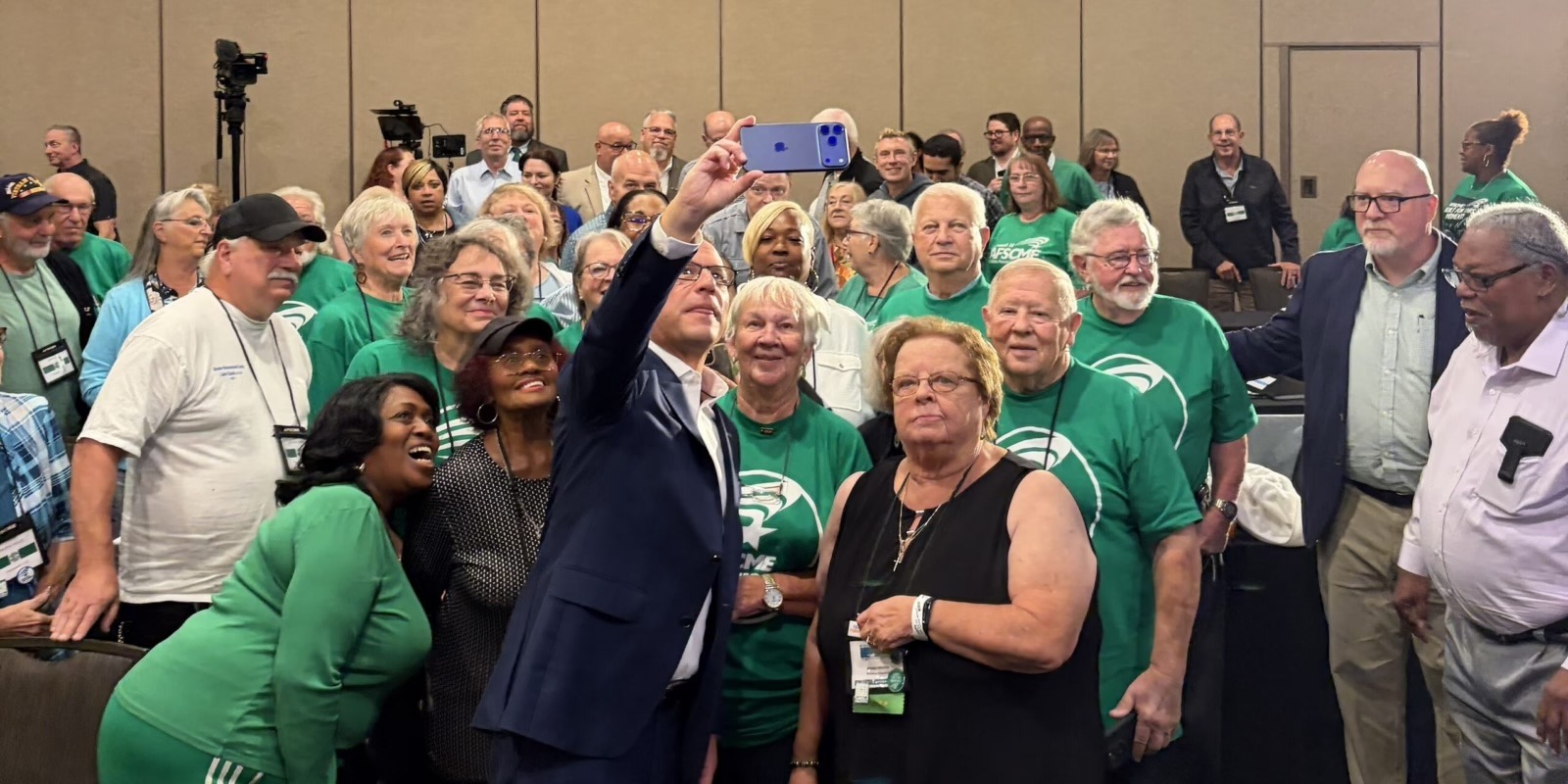
During the Retired Public Employees of Pennsylvania Chapter 13’s 45th annual convention in Harrisburg, AFSCME President Patrick Moran and International Executive Board Retiree Representative Jeanne Weaver hosted Governor Shapiro.
Shapiro signed the law on July 12, and this week, the first marginally larger deposits hit members’ accounts. The Governor joined retirees for their Harrisburg celebration and took a selfie with organizers.
Oklahoma: Mazzei Promises Regular COLA’s and No DB Changes
This week, Oklahoma gubernatorial candidate Mike Mazzei went on record in the Lawton Constitution, saying retirees covered by the Oklahoma Public Employees Retirement System (OPERS) deserve regular COLA adjustments. Additionally, Mazzei committed to opposing any changes to the state’s defined benefit system as governor.
“COLAS (cost of living adjustments) should (happen) every other year; getting our pension systems to 90% funded makes that possible,” he said. “We need to have regular cost of living adjustments.”
While Mazzei’s comments on COLAs and state pensions are welcome news, his campaign website still proposes a measure to “shift large urban counties [to] a more sustainable retirement model through 401(k) plans for county employees.” In a newer edit, the site also notes in parentheses: “This will not change any of the state retirement systems for Teachers, Police, Firefighters or Law Enforcement.”
But let’s not forget, Mazzei spent over a decade in the state Senate pushing the precise shift he’s now promising not to make. If elected, Oklahoma public employees will watch closely to see which Mazzei shows up. Will it be the person now pledging his support for pensions, or the one who spent years railing against the retirement security of firefighters and teachers?
From The Defined Benefit: Commentary on SEC Pension Proposals
The SEC has proposed rescinding its pay-to-play rule for investment advisers and Rule 14a-8, which provides the federal framework for qualifying shareholder proposals in companies’ proxy materials. In a new Defined Benefit commentary, NPPC argues that these changes could weaken safeguards against political influence in pension management and reduce pension funds’ ability to hold corporate boards accountable.
Read the commentary: Pension Funds Could Lose SEC Tools to Combat Corruption and Hold Corporations Accountable.
AFT: Investigate AI Risks Before Workers Pay the Price
A 1.875-million-member union is calling for swift action to address the existential threat hyperscale AI investments may pose to members’ retirement security and the entire U.S. economy. This week, the American Federation of Teachers called for the Financial Stability Oversight Council to investigate risks arising from AI-related investment, including concentrated valuations and financing arrangements in which connected companies fund one another. Union trustees oversee nearly 5,000 individual public pension plans. The action follows concerns expressed by members of the AFT Trustee Council.
AFT President Randi Weingarten sent a letter to Treasury Secretary Scott Bessent. Weingarten is calling for “an immediate investigation into serious financial risks from the artificial intelligence sector’s rapid debt-laden expansion.”
“The alarm bells could not ring any louder,” said Weingarten. “If President Donald Trump won’t act to protect working people’s deferred wages from the dangers AI poses to the U.S. economy, public officials need to act. Educators, nurses and public employees didn’t create this AI bubble, and they shouldn’t be the ones who pay for it if it bursts.
“Our members have already lived through one devastating financial crisis that set workers back financially for more than a decade, and we will not stand by while regulators look the other way as Wall Street piles up trillions in hidden debt and circular deals to chase the next valuation high.” Be sure to check back next Friday for the latest news in the fight for a secure retirement!
For now, sign up for NPPC News Clips to receive daily pension news from across the country directly to your inbox.