
Black History Month is a time to reflect not only on the struggle for voting rights, desegregation, and political representation, but also on the enduring fight for economic dignity and security. One often overlooked part of that history—and that struggle—is retirement security.
Public pensions are frequently discussed in fiscal or actuarial terms. Yet when viewed through a historical and racial equity lens, they also represent a civil rights issue, rooted in long-standing inequities in wages, wealth accumulation, and access to retirement benefits.
Economic Security Has Always Been a Civil Rights Issue
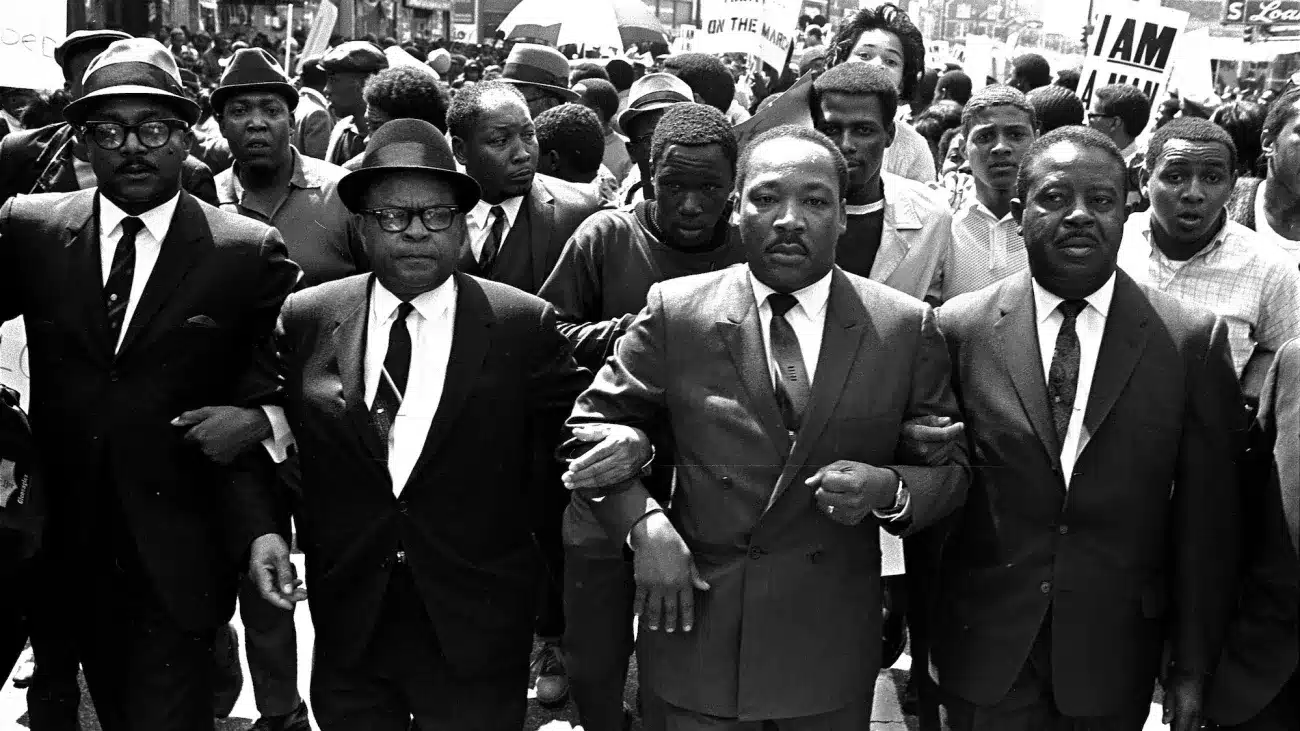
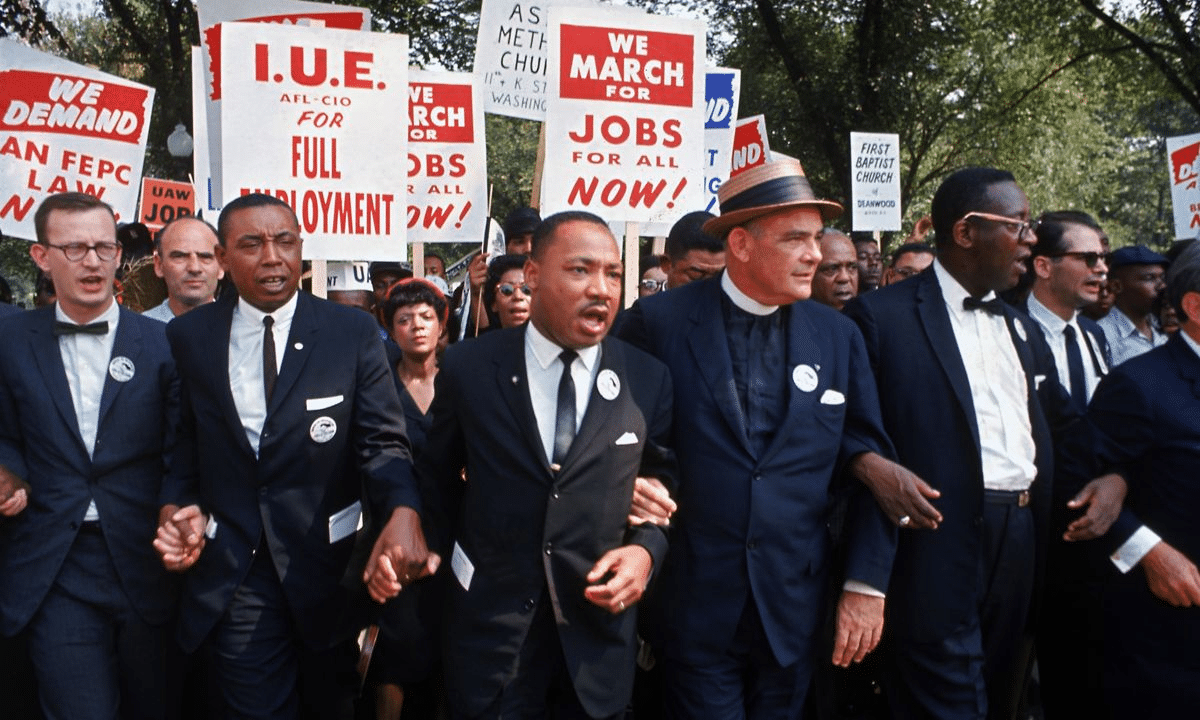
Civil rights leaders consistently emphasized that freedom without economic stability is incomplete. In his final years, Dr. Martin Luther King Jr. devoted increasing attention to poverty, labor rights, and the fundamental link between economic security and human dignity.
Many of Martin Luther King Jr.’s teachings warned that poverty does more than deprive people of goods and services—it strips them of dignity, hope, and self-respect.
This belief was not abstract. Dr. King was assassinated in 1968 while supporting striking Black sanitation workers, members of AFSCME Local 1733, in Memphis—workers demanding fair wages, safe working conditions, and dignity on the job. These same principles underpin the importance of retirement security: the promise that a lifetime of work will not end in hardship or fear.
Why Public Pensions Matter for Racial Equity
Public sector jobs—teaching, nursing, sanitation, transit, and public safety—have historically offered more equitable pay structures and reliable retirement benefits, especially for Black workers and women.
Data shows:
- ➝ Black workers are more likely than white workers to be employed in the public sector, particularly in state and local government.
- ➝ Public pensions provide defined benefits, offering predictable lifetime income that does not depend on individual investment risk.
- ➝ Workers with pensions are far less likely to experience poverty in retirement.
The National Institute on Retirement Security (NIRS) found that:
- ➝ Retirees with a pension often have a higher, more secure retirement income than 401(k) holders who rely on personal savings and market performance.
- ➝ Defined benefit pensions significantly reduce racial and gender retirement income gaps.
In a labor market shaped by inequality, public pensions have functioned as one of the few remaining equalizers.
The Racial Retirement Gap Is Not an Accident
Today, Black retirees without pensions face compounding disadvantages in retirement. They are:
- ➝ Less likely to have access to employer-sponsored retirement plans
- ➝ More likely to rely solely on Social Security
- ➝ More vulnerable to market downturns when their retirement savings are tied to individual investment accounts
These disparities are not the result of personal choice or financial literacy. According to the Economic Policy Institute, the national shift away from pensions toward 401(k)-style plans has exacerbated inequality, because these accounts reward higher incomes, uninterrupted careers, and generational wealth—advantages shaped by decades of discriminatory policy.
As Nari Rhee, director of the Retirement Security Program at the UC Berkeley Labor Center, explains:
“Access to pensions and other benefits through unions in American industry was a really important path to middle-class economic security for the Black community. The shift from pensions to 401(k)s has disproportionately hurt low-wage workers and groups that are concentrated in low-wage labor markets.”
Together, these trends help explain why retirement insecurity remains deeply racialized—and why defined benefit pensions continue to play a critical role in narrowing, rather than widening, the gap.
Public pensions, by contrast:
- ➝ Are pooled and professionally managed
- ➝ Do not penalize workers for market volatility
- ➝ Reward years of service, not wealth
Attacks on Public Pensions and Civil Rights Implications
Efforts to weaken, freeze, or replace public pensions disproportionately affect:
- ➝ Black workers
- ➝ Women
- ➝ Essential workers who already face wage and wealth disparities
When policymakers undermine pension systems, the consequences are not evenly distributed. The result is increased retirement insecurity for individuals and communities that have historically been denied other pathways to wealth.
Protecting and strengthening public pensions is fulfilling a promise of fairness after generations of exclusion.
Retirement Security as a Matter of Dignity
At its core, the civil rights movement has always been about dignity: dignity in work, dignity in wages, and dignity in old age. Public pensions help ensure that the people who educate children, care for the sick, keep communities safe, and maintain public infrastructure can retire with stability—not uncertainty.
As we honor Black History Month, recognizing public pensions as a civil rights issue reminds us that economic justice does not end at the ballot box or the workplace door. It extends into retirement—and into the fundamental promise that a lifetime of service deserves security, respect, and dignity.